
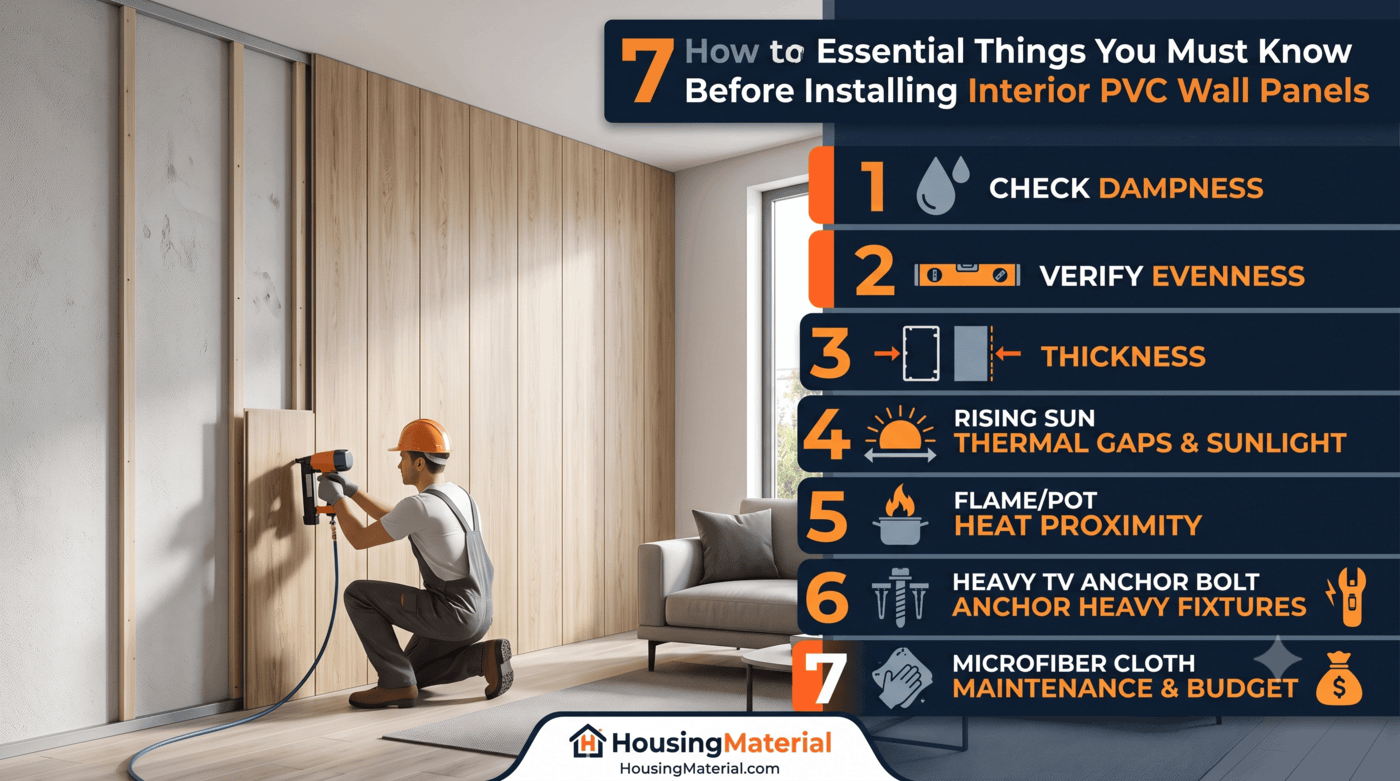
Upgrading interior spaces often comes with trade-offs between speed, cost, and longevity. While traditional paint requires extensive surface preparation and wallpaper frequently peels in humid conditions, interior Polyvinyl Chloride (PVC) wall panels have become an increasingly popular modern alternative. They are lightweight, moisture-resistant, budget-friendly, and capable of replicating finishes from natural wood fluting to polished Italian marble.
However, installing PVC panels without proper planning can lead to hollow sounds, buckling joints, or trapped dampness. Before hiring an installer or placing a bulk order, here are seven crucial technical and practical factors you need to know.
1. Dampness: PVC Hides It, It Does Not Cure It
One of the main selling points of PVC wall panels is that they are 100% waterproof and termite-resistant. This makes them ideal for concealing unsightly flaking paint or stubborn efflorescence (salt deposits) on internal walls.
Nevertheless, panelling over a damp wall is a cosmetic fix, not a structural cure:
- Capillary Action & Trapped Moisture: If water seepage originates from leaking bathroom pipelines or external masonry cracks, covering it with plastic sheets traps the water inside the brickwork.
- Mold & Odors: Over time, lack of ventilation behind the hollow grooves can encourage hidden mold proliferation.
- Best Practice: Identify the root cause of the dampness and apply a waterproofing slurry coat or sealant before cladding the wall.
2. Base Wall Evenness Determines the Framing Strategy
You cannot install PVC tongue-and-groove panels directly onto an uneven surface without a framing grid. Assess your wall profile first:
| Wall Condition | Recommended Installation Method | Hardware / Substrate Required |
| Even, Plastered Masonry | Direct Surface Mount | Heavy-duty MS/SS clips, silicone adhesive, expansion screws |
| Uneven Plaster / Undressed Brick | Grid Framing (Battens) | Aluminum channel framework or treated wooden battens (24-inch spacing) |
| Old Ceramic Tiles (Kitchen / Washroom) | Direct Adhesive Cladding | Neutral-cure silicone or hybrid polymer adhesive (no drilling required) |
Note: For damp or coastal environments, avoid unseasoned wooden battens as framing; utilize galvanized iron (GI) or aluminum sections instead to prevent internal frame rot.
3. Hollow-Core vs. Solid Composite: Choosing the Right Thickness
Not all PVC panels carry the same structural resilience. Interior wall panels fall generally into three profile grades:
- Standard Hollow-Fluted Panels (6 mm to 9 mm): Highly economical and lightweight with internal honeycomb ribs. Ideal for residential ceilings and low-impact feature walls behind TVs or headboards. However, they can dent or crack if hit by heavy moving furniture.
- Heavy-Duty / High-Density PVC (9 mm to 12 mm): Reinforced outer walls that withstand daily surface bumps in busy corridors, dining halls, and children's rooms.
- PVC / Charcoal Louver Panels: Solid or semi-solid pre-finished profiles designed specifically for statement walls, offering enhanced sound dampening and tactile luxury.
4. Thermal Expansion & Sunlight Sensitivity
PVC is a thermoplastic material that naturally expands and contracts with fluctuations in temperature.
- Expansion Gaps: Installers must maintain a 2 mm to 4 mm clearance along the top cornice and skirting trims. Fixing panels too tightly edge-to-edge will cause them to warp or buckle outwards during summer peaks.
- UV Degradation: Standard interior-grade PVC films lack industrial UV stabilizers. Avoid placing interior-rated panels where harsh, direct afternoon sunlight pours through untreated clear-glass windows, as the printed film will fade or turn brittle over time.
5. Fire Retardancy and Heat Proximity Limits
Interior-grade PVC panels are typically self-extinguishing (meaning they stop burning once the external flame source is removed). Even so, they are not designed for direct exposure to high heat:
- Kitchen Stoves: Maintain a minimum distance of at least 18 inches between hollow PVC panels and open gas flames or heavy cooktops. For backsplashes directly behind cooktops, opt for toughened glass, quartz, or ceramic tiles.
- Concealed Electrical Lines: Any short circuits within internal wiring can melt the backing. Ensure all internal junction boxes and wiring conduits are fully insulated and securely fixed prior to panelling.
6. Wall-Mounted Heavy Fixtures Must Be Anchored Into the Brickwork
A common post-installation pitfall is attempting to mount televisions, floating console units, geysers, or heavy artwork directly onto PVC panels.
Because standard PVC panels are hollow-extruded, their surface cannot bear shear loads.
- Pre-Plan Drill Anchor Points: Measure where TVs, heavy frames, or wall lamps will sit before panelling starts.
- Long Anchor Fasteners: Fasteners must pass completely through the hollow panel and grip securely into the concrete or brick masonry behind it.
- Wood Backing Blocks: If building an entertainment wall, place wooden framing blocks behind the panels exactly where the TV bracket will be mounted.
7. Cost Considerations & Maintenance Simplicity
Compared to real wood cladding, POP punning, or textured wallpaper, interior PVC panelling offers a predictable, low-maintenance lifecycle.
- Project Turnaround: A standard 10x12-foot room can be fully transformed in less than 24 to 48 hours with minimal on-site dust.
- Cleaning Routine: PVC does not absorb stains. Clean it using warm water and mild liquid soap on a microfiber sponge. Avoid solvent-based thinners, pure acetone, or abrasive scrubbers, as these strip the protective clear-coat lamination.
- Cost Efficiency: While premium hardwood panelling costs between 3x to 5x more, quality PVC panels provide a clean aesthetic finish with zero recurring repainting expenses.
Final Check Before Starting
Before purchasing your panels, inspect your wall dampness levels, measure framing requirements accurately, and verify panel density to ensure an interior finish that remains durable, stable, and visually sharp for years to come.